Stucco Siding Installation: A Comprehensive Guide
Embark on a journey into the world of stucco siding installation, exploring its intricacies and benefits while delving into the essential techniques required for a successful project.
Unravel the mysteries surrounding stucco siding as we uncover the step-by-step process, tools needed, and finishing touches that ensure a flawless outcome.
Overview of Stucco Siding Installation
Stucco siding is a popular exterior finish that is made of cement, sand, lime, and water. It is applied in multiple coats, providing a durable and attractive finish to homes and buildings. Stucco siding offers several benefits, including excellent moisture resistance, fire resistance, and durability.
It can also help improve the energy efficiency of a building by providing additional insulation.
Importance of Proper Installation Techniques
Proper installation techniques are crucial when it comes to stucco siding. Incorrect installation can lead to issues such as cracking, water damage, and mold growth. It is essential to ensure that the substrate is properly prepared before applying the stucco, and that the right mixture and thickness are used for each coat.
Additionally, proper curing and maintenance are necessary to ensure the longevity and performance of the stucco siding.
Types of Stucco Siding Available
There are different types of stucco siding available in the market, each with its unique characteristics and applications. Traditional stucco, also known as hard coat stucco, consists of multiple layers applied over a wire mesh base. Synthetic stucco, or EIFS (Exterior Insulation and Finish System), is a more modern alternative that offers enhanced flexibility and insulation properties.
Acrylic stucco is another popular option that provides a smoother finish and is available in a wide range of colors. It is essential to consider the specific requirements of your project when choosing the type of stucco siding to ensure the best results.
Pre-Installation Preparations
Before starting the stucco siding installation process, it is crucial to make adequate preparations to ensure a successful outcome. This includes gathering the necessary tools and materials, preparing the surface, and ensuring favorable weather conditions for installation.
List of Tools and Materials
- Trowel
- Hawk
- Float
- Stucco mix
- Wire mesh
- Scratch coat
- Finish coat
- Bucket
- Stucco tape
- Safety goggles
- Gloves
- Ladder
- Utility knife
Preparing the Surface
Before applying the stucco siding, it is essential to prepare the surface properly. This involves cleaning the area to remove any dirt, debris, or loose particles that could interfere with the adhesion of the stucco. Any damaged or deteriorated areas should be repaired or replaced before proceeding with the installation.
Additionally, ensuring that the surface is clean and dry will help the stucco adhere better and prevent any issues in the future.
Ensuring Proper Weather Conditions
Proper weather conditions are essential for a successful stucco siding installation. Avoid installing stucco in extreme temperatures, either too hot or too cold, as this can affect the curing process and the overall quality of the finish. It is recommended to install stucco siding on a dry day with moderate temperatures to allow for proper drying and curing of the stucco mix.
Extreme weather conditions can lead to cracking, discoloration, or other issues with the stucco siding.
Installation Process
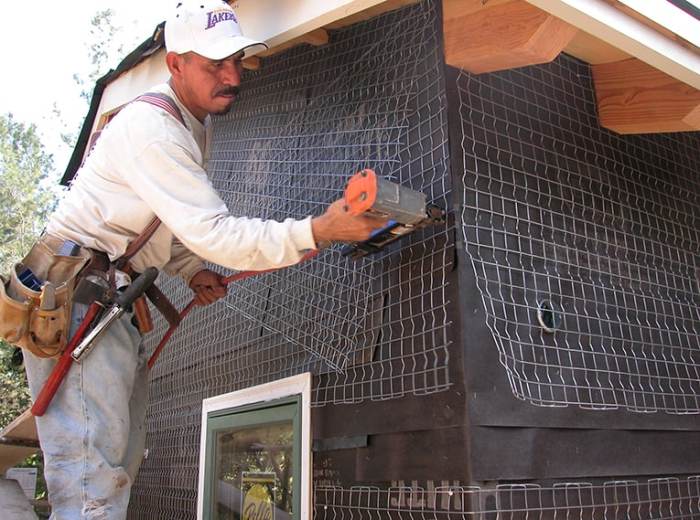
When it comes to installing stucco siding, there are specific steps that need to be followed to ensure a successful application. Understanding the process and different methods for applying stucco is crucial for achieving a professional finish. Addressing corners, edges, and intricate areas correctly is also important to prevent any future issues with the siding.
Step-by-Step Process
- Prepare the surface by cleaning and repairing any damages.
- Apply a bonding agent to ensure proper adhesion of the stucco.
- Mix the stucco material according to the manufacturer’s instructions.
- Apply the stucco evenly using a trowel or sprayer, depending on the chosen method.
- Texture the stucco as desired before it completely sets.
- Cure the stucco properly to allow it to harden and set completely.
Methods for Applying Stucco
- Traditional Three-Coat Method: Involves applying a scratch coat, brown coat, and finish coat.
- One-Coat Method: Combines the scratch and brown coat in one application for a quicker process.
- Exterior Insulation and Finish System (EIFS): Uses a foam insulation board as a base for the stucco.
Addressing Corners, Edges, and Intricate Areas
- Use corner beads to reinforce and protect corners from damage.
- Apply stucco carefully around edges to ensure a clean and seamless finish.
- Utilize a small trowel or brush for intricate areas to maintain precision and detail.
Finishing and Curing
When it comes to finishing and curing stucco siding, there are specific techniques and steps that need to be followed to ensure a durable and visually appealing result. Proper finishing not only enhances the texture and appearance of the stucco but also plays a crucial role in its longevity and performance.
Finishing Techniques
- Float Finish: This technique involves using a float to smooth out the stucco surface, creating a uniform texture.
- Dash Finish: By throwing small particles onto the stucco while it is still wet, a textured finish can be achieved.
- Acrylic Finish: Applying an acrylic finish coat can provide added protection and color to the stucco.
Curing Process
Properly curing stucco is essential for its strength and durability. Curing allows the stucco to harden properly and develop its full strength over time. It is crucial to keep the stucco moist during the curing process to prevent cracking and ensure a solid bond with the substrate.
Additional Coatings and Sealants
- Waterproofing Sealant: Applying a waterproofing sealant can help protect the stucco from moisture damage and prolong its lifespan.
- Color Coat: Adding a color coat on top of the stucco can enhance its aesthetic appeal and provide additional protection against the elements.
- Anti-Efflorescence Coating: An anti-efflorescence coating can prevent the formation of salt deposits on the stucco surface, maintaining its appearance over time.
Concluding Remarks
As we wrap up this discussion on stucco siding installation, remember the key points Artikeld to achieve a seamless and durable finish. Let your creativity flow as you embark on your stucco siding journey!
FAQs
What are the benefits of stucco siding?
Stucco siding offers excellent durability, fire resistance, and low maintenance, making it a popular choice for homeowners.
What tools are needed for stucco siding installation?
Some essential tools include a trowel, hawk, float, and a sprayer for applying the stucco mixture.
How long does stucco siding typically last?
With proper maintenance and care, stucco siding can last up to 50 years or more, providing long-term value.
Can stucco siding be painted?
Yes, stucco siding can be painted with quality exterior paint to refresh its appearance or change the color.